
AI-Powered SEO Strategies for Higher Google Rankings
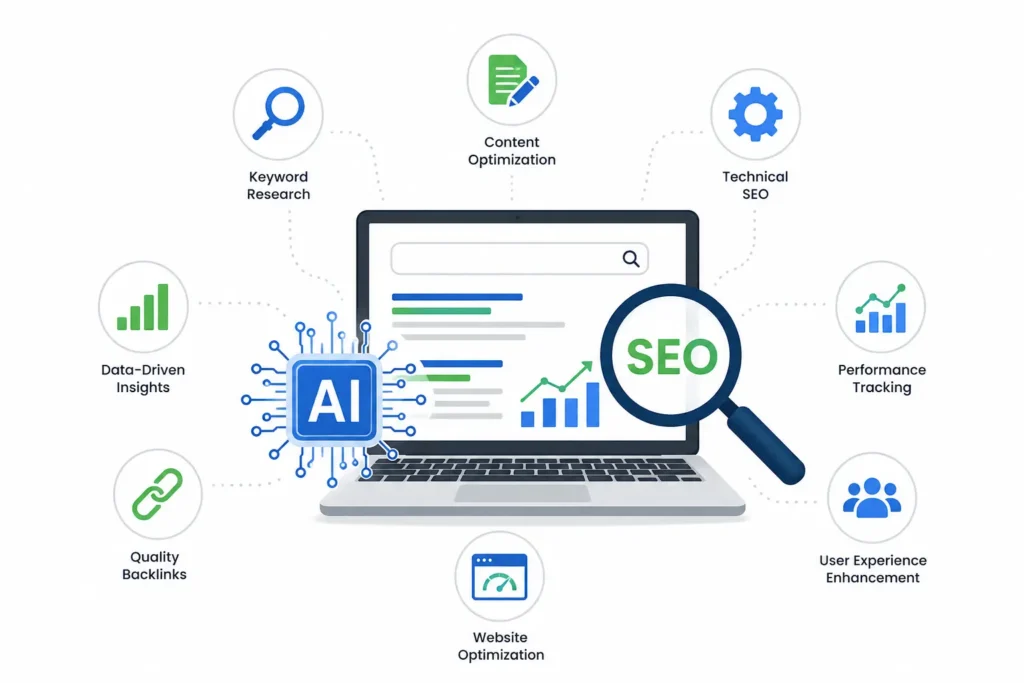
As search engines become more intelligent and user expectations rise, search engine optimization (SEO) keeps changing. Businesses that rely on traditional SEO methods alone may struggle to maintain visibility in search results. Artificial intelligence (AI) is revolutionizing search engine optimization (SEO) by assisting marketers in better understanding user behavior, producing pertinent content, analyzing rivals, and optimizing website performance.
Businesses may raise their search rankings, draw in targeted customers, and improve user experience by integrating AI tools with a robust SEO plan. In order to help websites rank higher on Google, this article examines useful AI-powered SEO techniques.
Understanding the Role of AI in SEO
One of the cornerstones of SEO is still keyword research. However, finding the right keywords manually can be time-consuming and may not reveal valuable opportunities.
AI-powered tools can analyze search patterns, user behavior, and keyword trends to uncover high-potential search terms. These tools can identify:
- Long-tail keywords with lower competition
- Related search queries
- User intent behind keywords
- Emerging search trends
- Content gaps within your industry
Instead of focusing only on high-volume keywords, businesses should target keywords that match the needs and interests of their audience.Higher conversion rates and improved engagement are frequently the results of this strategy.
Create Content Based on Search Intent
The increasing significance of search intent is one of the most significant changes in SEO. Google aims to give people solutions that are tailored to their individual requirements.
AI tools can help identify whether users are searching for information, products, services, comparisons, or solutions. Understanding this intent allows businesses to create content that directly addresses user questions.
For example:
- Informational intent: Blog articles and guides
- Commercial intent: Product comparisons and reviews
- Transactional intent: Service pages and product pages
- Navigational intent: Brand-specific content
The increasing significance of search intent is one of the most significant changes in SEO.
Improve Content Quality with AI Insights
High-quality content is still one of the most crucial ranking criteria. AI systems are able to evaluate the performance of material and offer suggestions for enhancements.
These insights may include:
- Missing topics and subtopics
- Readability improvements
- Content structure suggestions
- Keyword placement recommendations
- Internal linking opportunities
While AI can assist with content optimization, human expertise remains essential. Content should reflect real-world knowledge, experience, and industry understanding. The goal is to create useful and trustworthy information rather than simply inserting keywords.
Optimize Existing Content
Many websites ignore their old pages in favor of merely publishing fresh content. One of the quickest strategies to raise rankings is frequently to update outdated content.
AI can help identify pages that:
- Have declining traffic
- Rank on the second page of Google
- Need updated information
- Require better keyword targeting
Refreshing content with current statistics, updated examples, improved formatting, and additional information can significantly increase visibility in search results.
Frequent content audits guarantee the accuracy and relevance of the information on websites.
Enhance Technical SEO Performance
Search rankings are significantly impacted by technical SEO. If a website has technological problems, even the best content could find it difficult to rank.
AI-powered SEO platforms can quickly identify problems such as:
- Slow page speed
- Broken links
- Duplicate content
- Missing meta descriptions
- Crawl errors
- Mobile usability issues
Resolving these problems enhances the functionality of websites and facilitates better page crawling and indexing by search engines.
Google places strong emphasis on user experience, making technical SEO a key component of any successful strategy.
Strengthen On-Page SEO
Search engines can better comprehend a page’s information thanks to on-page SEO.
AI tools can assist in optimizing:
Title Tags
Create clear and engaging titles that include target keywords naturally.
Meta Descriptions
Write concise descriptions that encourage users to click.
Headings
To enhance readability and content organization, use structured headers.
Internal Links
Connect related pages throughout the website to improve navigation and authority flow.
Image Optimization
To increase website performance and accessibility, use alt text, compressed pictures, and descriptive file names.
Modest adjustments to multiple pages can lead to improved SEO performance.
Use AI to Analyze Competitors
Competitor analysis provides valuable insights into what is working within your industry.
AI-powered tools can evaluate:
- Competitor keywords
- Top-performing content
- Backlink profiles
- Content gaps
- Ranking opportunities
By understanding competitors’ strengths and weaknesses, businesses can develop more effective SEO strategies and identify areas where they can outperform others.
The goal is not to copy competitors but to find opportunities to provide greater value and a better user experience.
Improve User Experience and Engagement
The importance of user experience as a ranking element has grown. Search engines pay attention to how visitors interact with a website.
AI tools can analyze user behavior data and identify patterns such as:
- Pages with high bounce rates
- Low engagement content
- Navigation challenges
- Conversion obstacles
Improving user experience may include:
- Faster page loading times
- Mobile-friendly design
- Clear navigation menus
- Easy-to-read content
- Strong calls to action
A positive user experience often leads to longer visit durations and better engagement, both of which can support stronger rankings.
Build a Data-Driven Content Strategy
Successful SEO requires consistency and strategic planning. AI can help businesses identify topics that are likely to attract traffic and generate engagement.
Content planning should focus on:
- Frequently asked questions
- Industry trends
- Customer challenges
- Educational resources
- Case studies and success stories
Creating content clusters around related topics helps establish authority and improves overall website relevance.
Instead of publishing content randomly, businesses should develop a structured content calendar based on data and audience needs.
Monitor SEO Performance Continuously
SEO is not a one-time task. Search algorithms, user behavior, and market competition change regularly.
AI-powered analytics tools help businesses monitor:
- Organic traffic growth
- Keyword rankings
- User engagement metrics
- Conversion rates
- Content performance
Regular monitoring allows businesses to identify what is working and make adjustments when needed.
Data-driven decisions are often more effective than assumptions, helping marketers allocate time and resources more efficiently.
Conclusion
AI is reshaping the SEO landscape by making research, optimization, and performance analysis faster and more accurate. However, achieving higher Google rankings still requires a balance between technology and human expertise.
Businesses that use AI for keyword research, content optimization, technical SEO, competitor analysis, and user experience improvements can gain a significant advantage in search results. The most successful approach is not to rely entirely on automation but to combine AI-driven insights with valuable, audience-focused content.
If you’re looking for a reliable digital marketing consultant in Dubai, I’m here to support your journey and help your brand grow with purpose.